
Top 10 Efficient Cooling Methods for Businesses?
For many businesses, cooling is a daily operating cost, not a background detail. A supermarket needs steady temperatures for food and comfortable aisles. A workshop may need targeted airflow near hot equipment. In an office, sunlight through a west-facing window can leave one room warmer than the rest. Efficient cooling methods address these practical differences instead of relying on one oversized system. Options can include smart thermostats, regular filter and coil cleaning, zoning, shading, and carefully controlled ventilation. Small changes matter. A blocked filter or poorly timed cooling schedule can waste energy and make rooms less comfortable. The best approach depends on the building, local climate, operating hours, and equipment condition.
Energy expert Amory Lovins, co-founder of the Rocky Mountain Institute, is widely associated with the line, “The cheapest energy is the energy you don’t use.” It offers a useful starting point for business cooling: reduce avoidable heat and demand before adding capacity. This guide examines ten practical methods, from simple maintenance routines to upgrades such as high-efficiency heat pumps and advanced controls. It also considers where each option may fit, what managers should measure, and which trade-offs deserve attention. A shaded loading area, for example, may help, but it will not solve an undersized system. No method works everywhere. Real buildings are messy, and savings depend on installation, maintenance, and actual use. That is worth remembering.
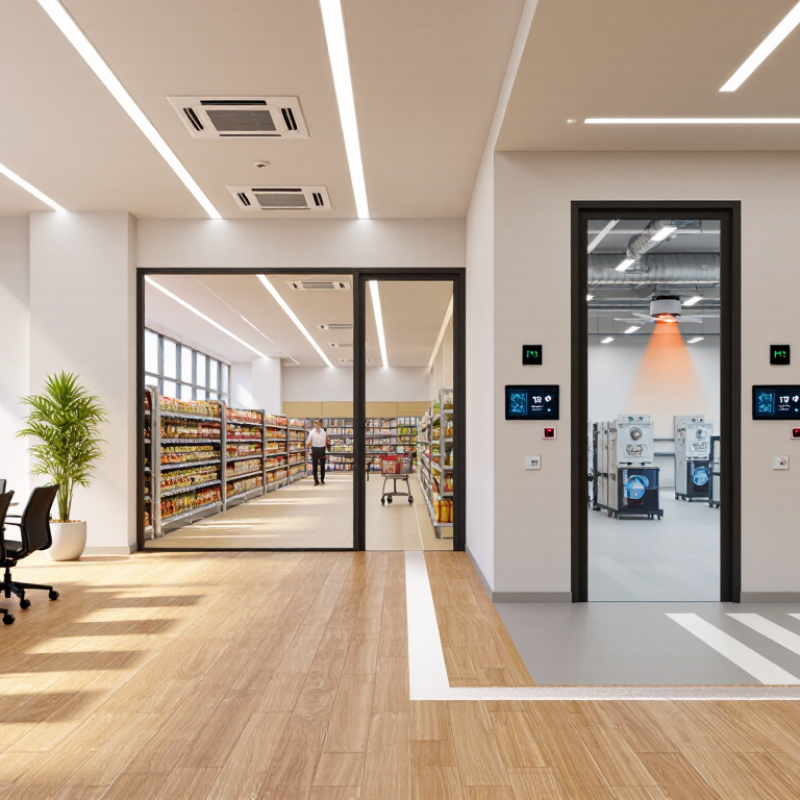
Benchmark Cooling Demand: IEA Estimates Space Cooling Uses About 10% of Global Electricity
The IEA estimates that space cooling uses about 10% of global electricity. That share gives businesses a useful benchmark, but it is not a forecast for any single building. A restaurant kitchen, a warehouse, and a small office have different cooling loads. Climate, occupancy, insulation, and equipment all affect demand. The number is significant. It also hides local differences.
Businesses can start with practical measures: calibrate thermostats, create cooling zones, seal air leaks, add exterior shade, and improve roof insulation. Clean filters and coils, maintain ducts, and use variable-speed fans where suitable. Efficient equipment and automated controls can help match cooling to occupancy. Natural ventilation or night flushing may work in some climates, but not all. Not every site agrees. A damp summer evening, for example, may make open windows a poor choice. Track electricity use alongside indoor temperatures, then adjust settings gradually. A simple meter reading can reveal whether a change reduced consumption or merely shifted the discomfort.
Top 10 Efficient Cooling Methods for Businesses? - Benchmark Cooling Demand: IEA Estimates Space Cooling Uses About 10% of Global Electricity
Benchmark: The International Energy Agency (IEA) estimated that space cooling accounted for about 10% of global electricity consumption in its 2018 analysis. The measures below are practical options; their results depend on the building, climate, operating hours, and existing equipment.
| No. | Cooling method | How it can reduce cooling demand or energy use | Best suited to | Useful performance metric |
|---|---|---|---|---|
| 1 | Improve the building envelope | Seal air leaks and add or improve insulation where appropriate. This reduces unwanted heat transfer and the amount of outdoor air that must be cooled. | Buildings with drafts, poorly insulated roofs or walls, or high cooling loads during hot weather. | Cooling energy use; indoor temperature stability; documented air-leakage or insulation test results. |
| 2 | Shade windows and manage solar gains | Use exterior shading, shutters, or appropriately selected solar-control glazing to limit sunlight and radiant heat entering occupied spaces. | Offices, retail spaces, and other buildings with substantial sun-exposed glazing. | Cooling energy use by zone; peak cooling demand; indoor temperature near sun-exposed windows. |
| 3 | Use reflective roofs where suitable | A roof with high solar reflectance absorbs less sunlight than a darker roof, which can reduce heat transfer into the building. Suitability depends on climate, roof design, and local conditions. | Low-rise buildings with large roof areas and significant exposure to strong sunlight. | Roof surface temperature; cooling energy use; peak cooling demand. |
| 4 | Optimize temperature setpoints | Choose a comfortable, appropriate cooling setpoint and avoid unnecessarily low settings. Check applicable health, safety, and workplace requirements before changing settings. | Sites where thermostats are set lower than needed or vary widely between zones. | Cooling energy use; setpoint compliance; occupant comfort feedback. |
| 5 | Install and tune controls and scheduling | Use programmable or building-level controls to match cooling operation to occupancy, operating hours, and zone needs. Avoid cooling unoccupied spaces unnecessarily. | Buildings with predictable schedules, multiple zones, or cooling systems that run outside occupied hours. | After-hours cooling runtime; scheduled versus actual operating hours; cooling energy use. |
| 6 | Maintain cooling equipment | Follow manufacturer maintenance guidance: keep coils and filters clean, maintain correct airflow, and inspect refrigerant systems for faults or leaks. Maintenance needs vary by equipment type. | All buildings with mechanical cooling, especially systems with declining performance or uneven temperatures. | Maintenance completion; airflow or pressure readings where applicable; energy use per operating hour. |
| 7 | Upgrade to appropriately sized, efficient equipment | When replacement is needed, compare equipment efficiency ratings and select capacity based on a proper load assessment. Oversized equipment can cycle frequently and may control humidity poorly. | Sites with aging or failing equipment, major renovations, or persistently high cooling energy use. | Rated efficiency; commissioning results; seasonal cooling energy use. |
| 8 | Use outdoor-air cooling when conditions allow | Economizers or suitable natural-ventilation strategies can use cooler outdoor air instead of compressor cooling when outdoor temperature, humidity, air quality, and building design permit. | Buildings and climates with periods when outdoor air is suitable for cooling. | Economizer operating hours; compressor runtime during suitable outdoor conditions; indoor comfort. |
| 9 | Use ceiling or personal fans appropriately | Air movement can improve perceived comfort for occupants, potentially allowing a higher cooling setpoint. Fans do not lower room air temperature and should be switched off in unoccupied areas. | Occupied spaces where air movement is acceptable and local comfort conditions can be managed. | Cooling setpoint; fan operating hours; occupant comfort feedback. |
| 10 | Reduce internal heat gains | Use efficient lighting and equipment, switch off idle devices, and locate heat-producing equipment appropriately. Less internal heat can reduce the load that cooling systems must remove. | Offices, kitchens, server rooms, and other spaces with substantial lighting or equipment loads. | Electricity use by end use where submetered; equipment operating hours; zone cooling demand. |
Source: IEA, The Future of Cooling: Opportunities for Energy-Efficient Air Conditioning (2018). Performance metrics are suggested monitoring measures, not guaranteed savings estimates.
Related Posts
-

China Top 10 Cooling System Optimization Suppliers
-
10 Tips for Buying Next Generation Cooling Systems
-
10 Essential Tips for High Performance Cooling Solutions
-

How to Choose the Right Cooling System Design in 2026?
-

What is Thermal Engineering Concepts and Why Are They Important?
-
2026 Best Cooling System Applications for Global Buyers?